Electrical problems have a funny way of starting small. A light flickers. A breaker trips. An outlet makes a noise you’re pretty sure it didn’t make yesterday.
Sometimes, it really is something minor. Other times, your electrical system is giving you a pretty clear warning that something is wrong.
The tricky part is knowing the difference.
If there is a risk of fire, electrical shock, or damage to your home, it’s time to stop troubleshooting and call an emergency electrician. Electrical problems are not something you want to experiment with, especially when you’re dealing with heat, sparks, strange smells, or exposed wiring.
Here are seven signs that an electrical problem needs attention right away.
1. You Smell Something Burning, but You Can’t Find the Source
A burning electrical smell is one of those things you should never ignore.
Electrical components can overheat behind walls, inside outlets, at switches, or in your electrical panel. You might smell hot plastic, burning insulation, or something that has a strange fishy or chemical smell.
Even if you don’t see smoke, that doesn’t mean everything is fine.
If you notice a burning smell around an outlet, switch, appliance, or electrical panel, stop using whatever is connected to that area. If you can safely shut off the affected circuit without approaching damaged or overheated equipment, do so. Then call an emergency electrician.
If there is visible smoke or fire, get everyone out of the home and call 911.
Electrical equipment is a leading cause of home fires in Ontario, and the province recommends having additional electrical work completed by a licensed electrician rather than overloading existing circuits or relying on temporary solutions. Ontario’s home fire safety information has more information on reducing electrical fire risks around your home.
2. An Outlet or Switch Is Sparking
You plug something in and get a tiny spark. Is that always an emergency?
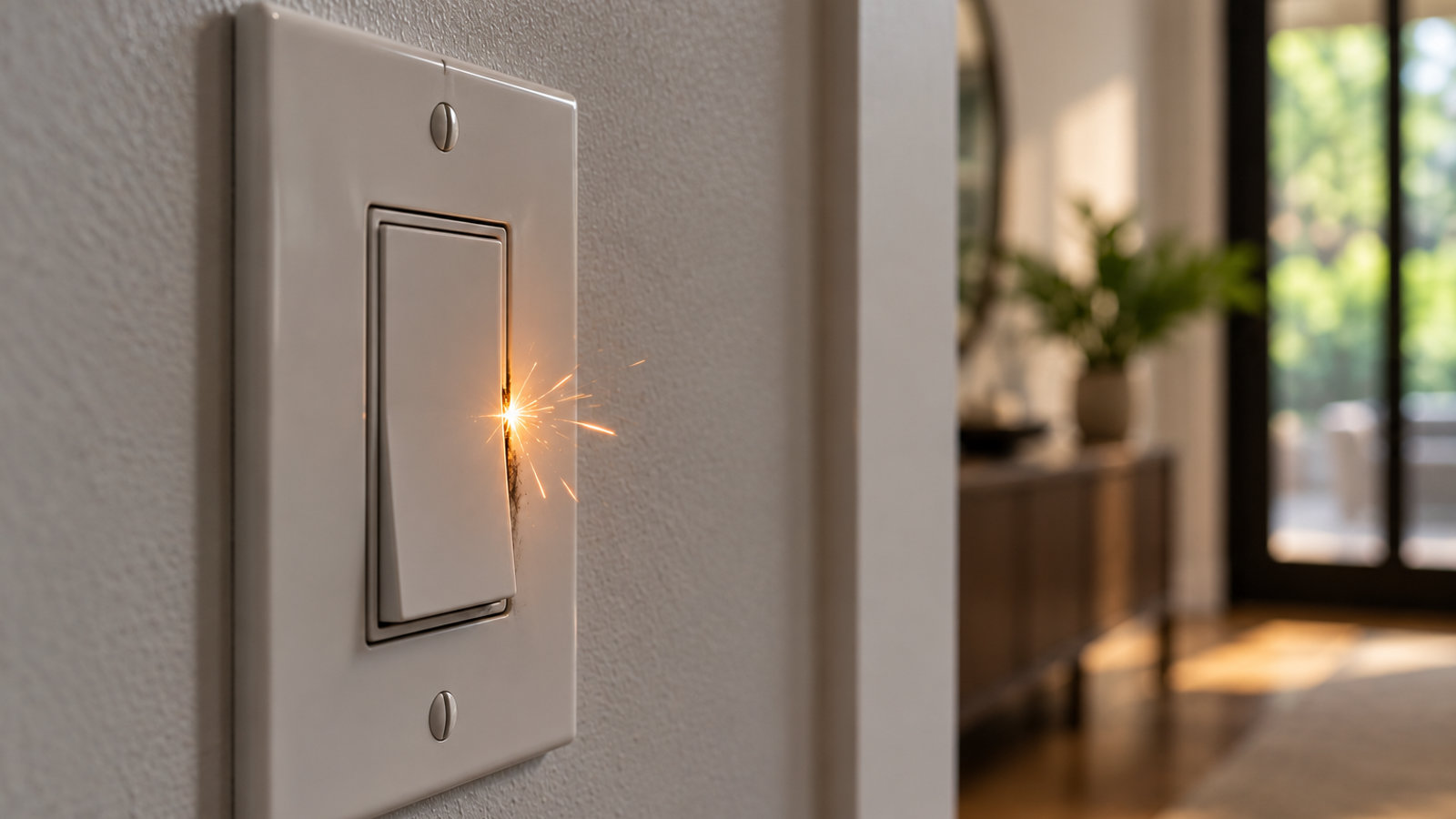
Not necessarily. A very small, brief spark can sometimes happen when a device is connected to an energized outlet. But repeated, large, or unusual sparking is another story.
If you have a sparking outlet that keeps doing it, produces a larger flash, smells burnt, looks discoloured, or feels warm, stop using it.
The problem could be inside the outlet itself, or there could be loose or damaged wiring behind it. Either way, continuing to plug things into it isn’t worth the risk.
This is a good time to call an emergency electrician and have someone figure out what’s actually happening instead of hoping it sorts itself out.
3. Your Electrical Panel, Outlet, or Switch Feels Hot
Electrical equipment can sometimes feel slightly warm during normal use, but it should never feel unusually hot.
Heat can be a sign of a loose connection, overloaded circuit, damaged wiring, or failing electrical component. You may also notice discolouration around the outlet or switch plate.
Don’t remove the cover to investigate. There’s not much useful information you’re going to get from poking around in there anyway, and there’s a whole lot you can accidentally touch.
An emergency electrician can safely inspect the circuit, find the source of the heat, and determine what needs to be repaired.
If the heat is coming from your electrical panel, especially if it’s accompanied by a burning smell, buzzing, or smoke, treat the situation seriously.
4. Your Breaker Keeps Tripping
Circuit breakers are supposed to trip. That’s part of their job.
A breaker shuts off power when it detects a problem, such as an overloaded circuit. If you were running the toaster, microwave, kettle, and air fryer at the same time and the breaker tripped once, you probably have a pretty good idea what happened.
But a breaker that trips repeatedly is trying to tell you something.
Resetting it over and over without figuring out why it keeps tripping doesn’t solve the problem. There may be an overloaded circuit, damaged wiring, a faulty appliance, or another electrical fault.
The Electrical Safety Authority specifically identifies frequently tripping breakers, flickering lights, and deteriorating wiring as signs of potential electrical hazards that should be evaluated by a Licensed Electrical Contractor. The ESA also reports that electrical wiring and equipment continue to be associated with a significant number of residential fires in Ontario.
If the breaker immediately trips again after being reset, leave it off and call an emergency electrician.
5. Part of Your Home Suddenly Loses Power
If the entire neighbourhood goes dark during a storm, your electrician probably isn’t your first phone call.
But what if your neighbour has power and half your house doesn’t?
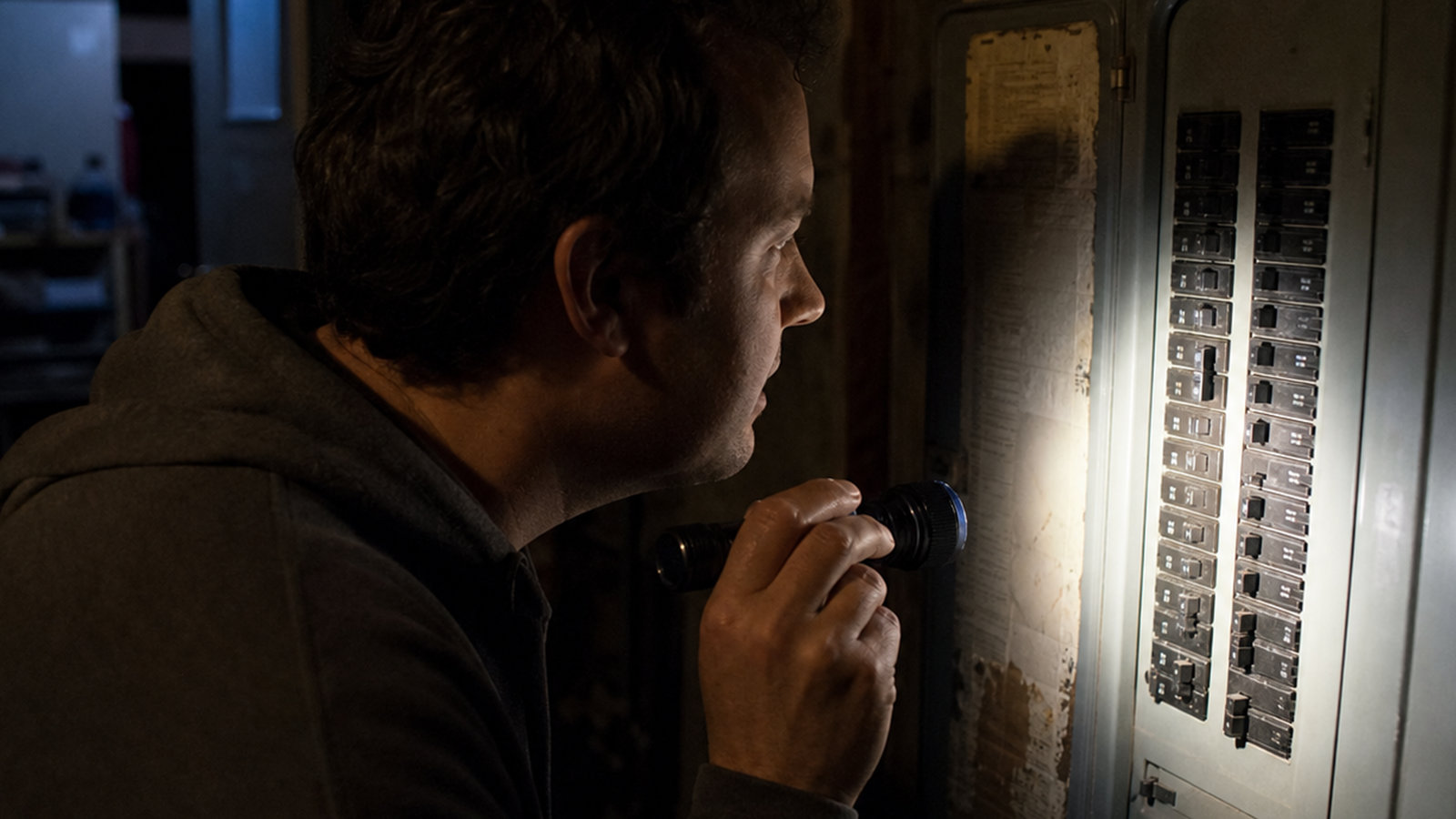
A partial power loss can point to a problem with your electrical system, panel, service, or utility connection. You might notice that some lights and outlets work normally while others suddenly stop working.
Start by checking whether there is a known utility outage. If there isn’t, and you can’t identify an obvious tripped breaker, it’s time for professional electrical troubleshooting.
This becomes more urgent if the power loss comes with flickering lights, buzzing, burning smells, heat, or other unusual behaviour.
A power outage electrician can determine whether the problem is inside your home or somewhere on the incoming electrical service.
6. You Hear Buzzing or Crackling
Electricity shouldn’t sound like it’s doing anything.
If you hear buzzing, humming, popping, or crackling coming from an outlet, switch, light fixture, or electrical panel, something may not be making a proper connection.
Loose electrical connections can create heat and arcing. That means a strange little noise can be a warning sign of a much bigger problem.
Don’t take the outlet apart to see what’s going on. Don’t keep flipping the switch to see if it makes the noise again. And definitely don’t smack it and hope for the best.
Stop using the affected equipment and call an emergency electrician to inspect it.
Electrical troubleshooting is a lot easier, and usually a lot less expensive, when we can find a problem before it damages other components.
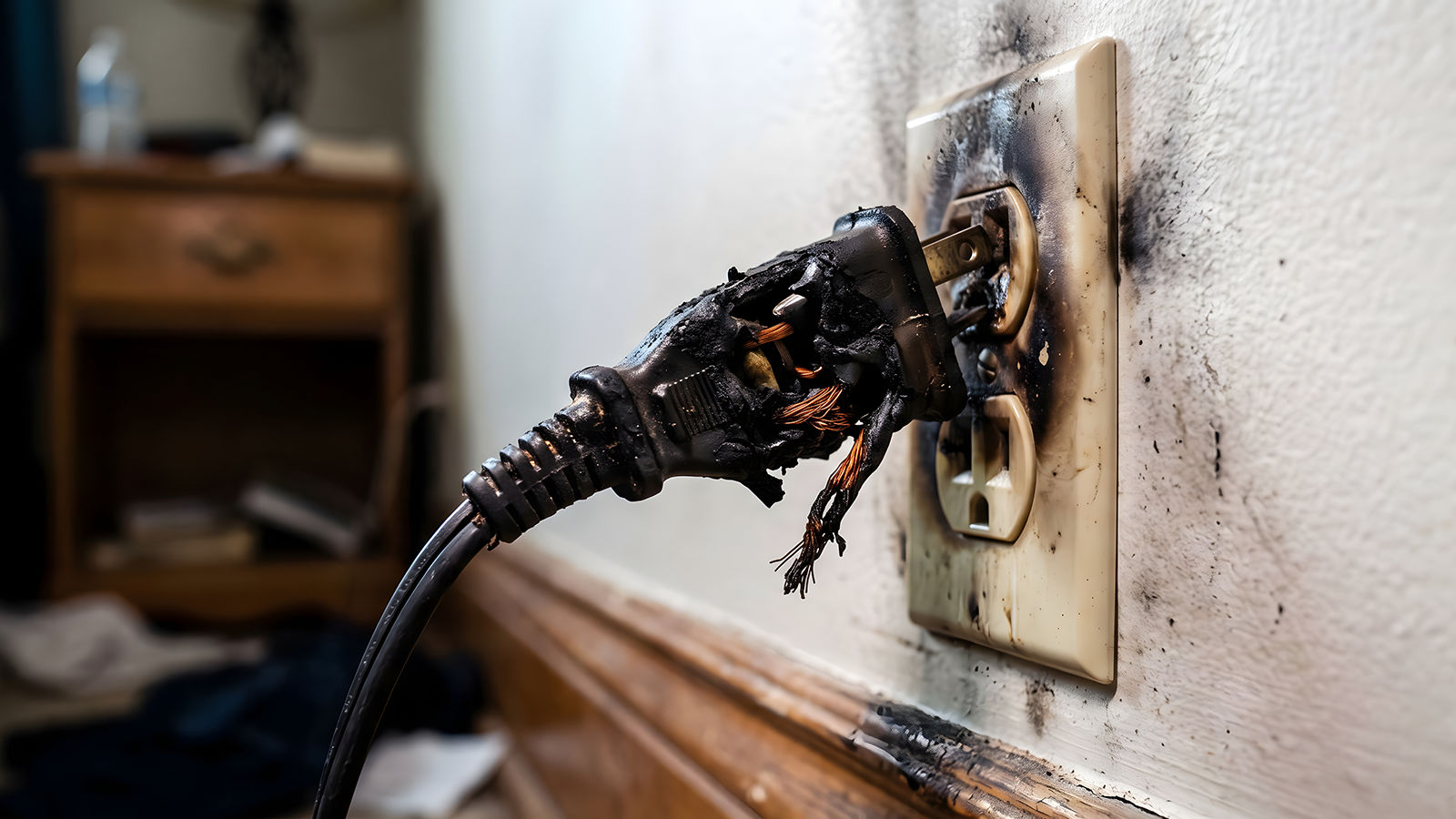
7. Electrical Equipment or Wiring Has Been Damaged
Electrical emergencies aren’t always caused by something failing on its own.
Renovations, water leaks, storms, fallen trees, rodents, accidents, and even somebody putting a screw through the wrong part of a wall can damage electrical wiring or equipment.
If you can see exposed wiring, a damaged electrical panel, a broken outlet, or anything else that could put you in contact with live electrical components, stay away from it.
Water makes the situation even more serious. If electrical equipment has been exposed to flooding or significant water damage, don’t assume it’s safe because the water is gone.
This is one of those situations where you want an electrician to take a look before the power is turned back on or the equipment is used again.
What Should You Do While Waiting for an Emergency Electrician?
First, stay away from the problem.
If you can safely turn off power to the affected circuit from your electrical panel, you can do that. But if the panel itself is hot, buzzing, smoking, sparking, or appears damaged, don’t approach it.
Keep other people and pets away from the area, and don’t touch exposed wiring or damaged electrical equipment.
If you see smoke or fire, smell a strong burning odour that appears to be getting worse, or believe there is an immediate danger to anyone in the home, leave and call 911.
Otherwise, give your electrician as much information as you can when you call. Tell them what happened, where the problem is, what you can see or smell, and whether you still have power. That helps us get a better idea of what we may be walking into.

Not Sure If It’s Really an Electrical Emergency? Call Anyway.
You don’t need to diagnose an electrical problem before you call us. That’s our job.
If something is sparking, overheating, repeatedly tripping, making strange noises, or simply doesn’t seem right, it’s worth asking.
EJR Electric offers 24-hour emergency electrical service in Orangeville and the surrounding area. If you need an emergency electrician, give us a call and tell us what’s happening. We can help you figure out what needs immediate attention and what can safely wait for a regular service appointment.
When electricity is giving you a warning, listening to it is usually the smart move.