If you live in an older home, you’ve probably come across a few things that aren’t quite how they’re done today. Maybe you’ve got an old fuse box, outlets in unusual places, or light switches that seem to control absolutely nothing. It’s all part of the charm of an older house, right?
But what about the wiring behind your walls?
If your home was built or renovated in the 1960s or 1970s, there’s a chance it has aluminum wiring. And if you’ve recently found out that’s the case, you probably have a few questions. Is it safe? Does it need to be replaced? Is this going to turn into a big, expensive project?
The good news is that finding aluminum wiring doesn’t automatically mean you need to tear open your walls and replace everything. However, it is something worth having checked out.
Let’s talk about what you need to know.
What Is Aluminum Wiring, and Why Was It Used?
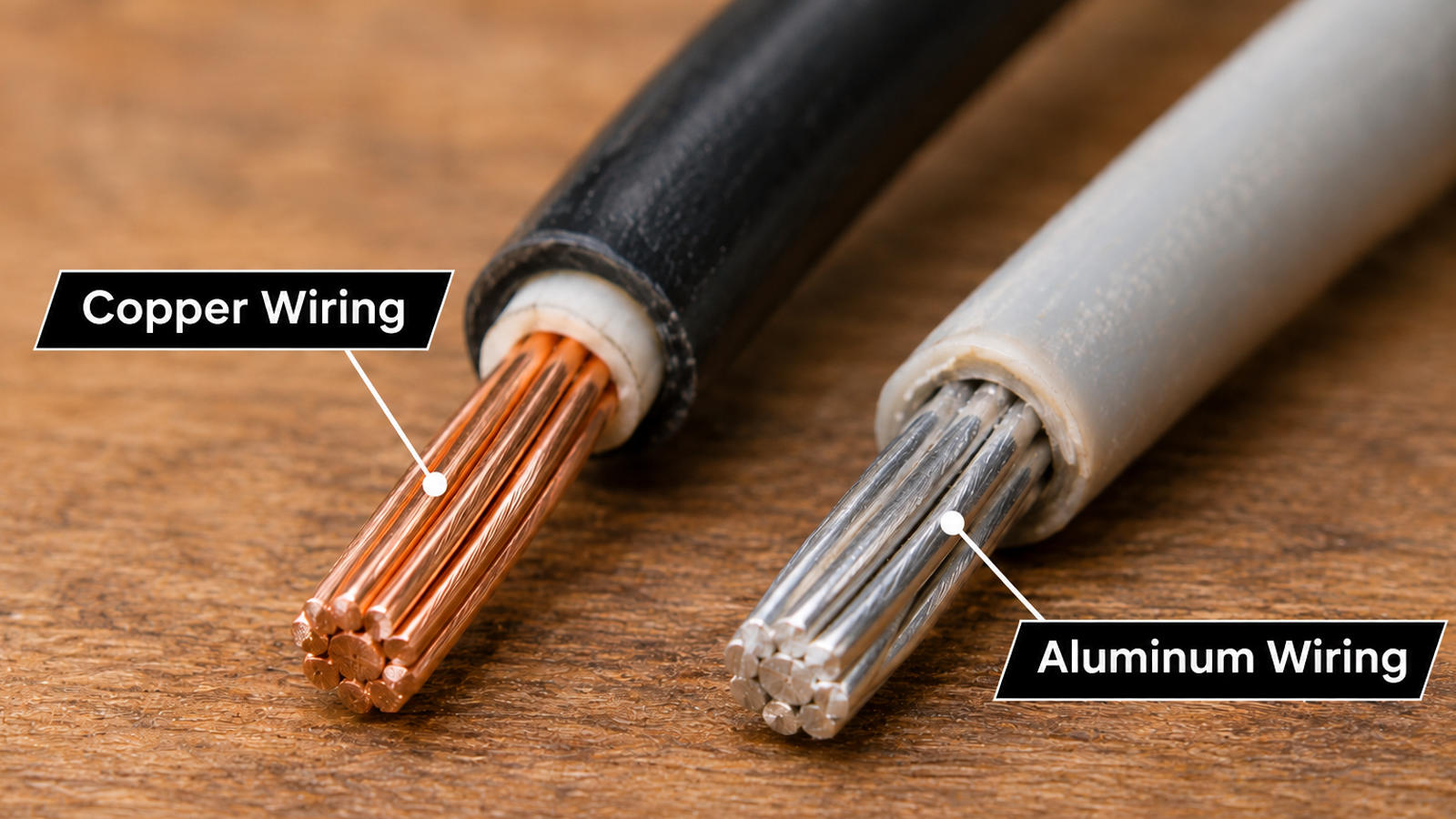
Years ago, copper was the standard material used for electrical wiring in homes. It still is today for most household branch circuits.
But during the 1960s and 1970s, copper prices went up, and builders started using aluminum as a more affordable option. It did the same basic job of carrying electricity throughout the house, and for a while, it seemed like a practical alternative.
The trouble wasn’t necessarily the aluminum itself. It was how the older wiring worked with the outlets, switches, and connections available at the time.
Aluminum expands and contracts as it heats up and cools down. Copper does too, but aluminum behaves differently. Over time, those changes can contribute to loose connections, especially when the devices weren’t designed for aluminum conductors.
And loose electrical connections are something we definitely want to avoid.
How Can You Tell If Your Home Has Aluminum Wiring?
Here’s where things get a little tricky. You can’t usually tell what kind of wiring you have just by looking at your outlets or light switches.
Most electrical wiring is tucked safely behind walls, inside electrical boxes, or within your electrical panel.
However, there are a few clues.
If your home was built between the mid-1960s and late 1970s, there’s a greater chance that aluminum was used for some of the electrical circuits. You might also find markings such as ALUMINUM or ALUM on the outer covering of visible wiring.
Another possibility is that aluminum wiring was used during a renovation or addition.
Of course, the age of your home doesn’t tell the whole story. Some houses from that period have copper wiring, while others have a combination of materials.
The easiest way to find out is to have a licensed electrician take a look. They can identify the wiring and check whether the connections are suitable for the materials being used.
There’s no need to open your electrical panel or remove outlets yourself. Those are jobs best left to someone with the right training and equipment.
Is Aluminum Wiring Actually Dangerous?
This is probably the biggest question homeowners have, and the answer isn’t a simple yes or no.
Aluminum is still used in electrical systems today, including larger service cables and feeders. Modern aluminum conductors, properly sized and installed with compatible equipment, can be safe and reliable.
The bigger concern is older aluminum branch-circuit wiring, particularly the type used for outlets, switches, and lighting circuits in homes built decades ago.
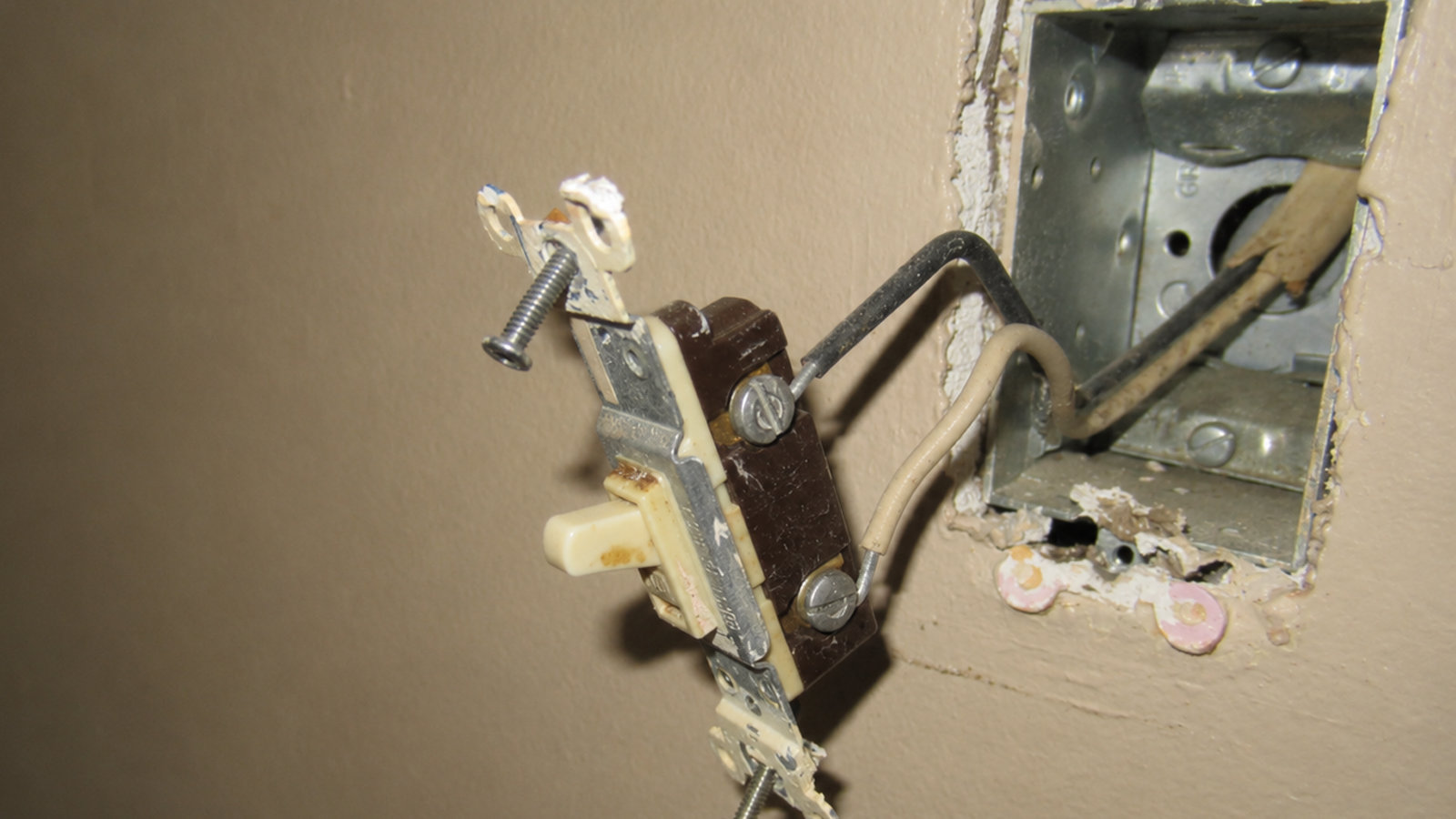
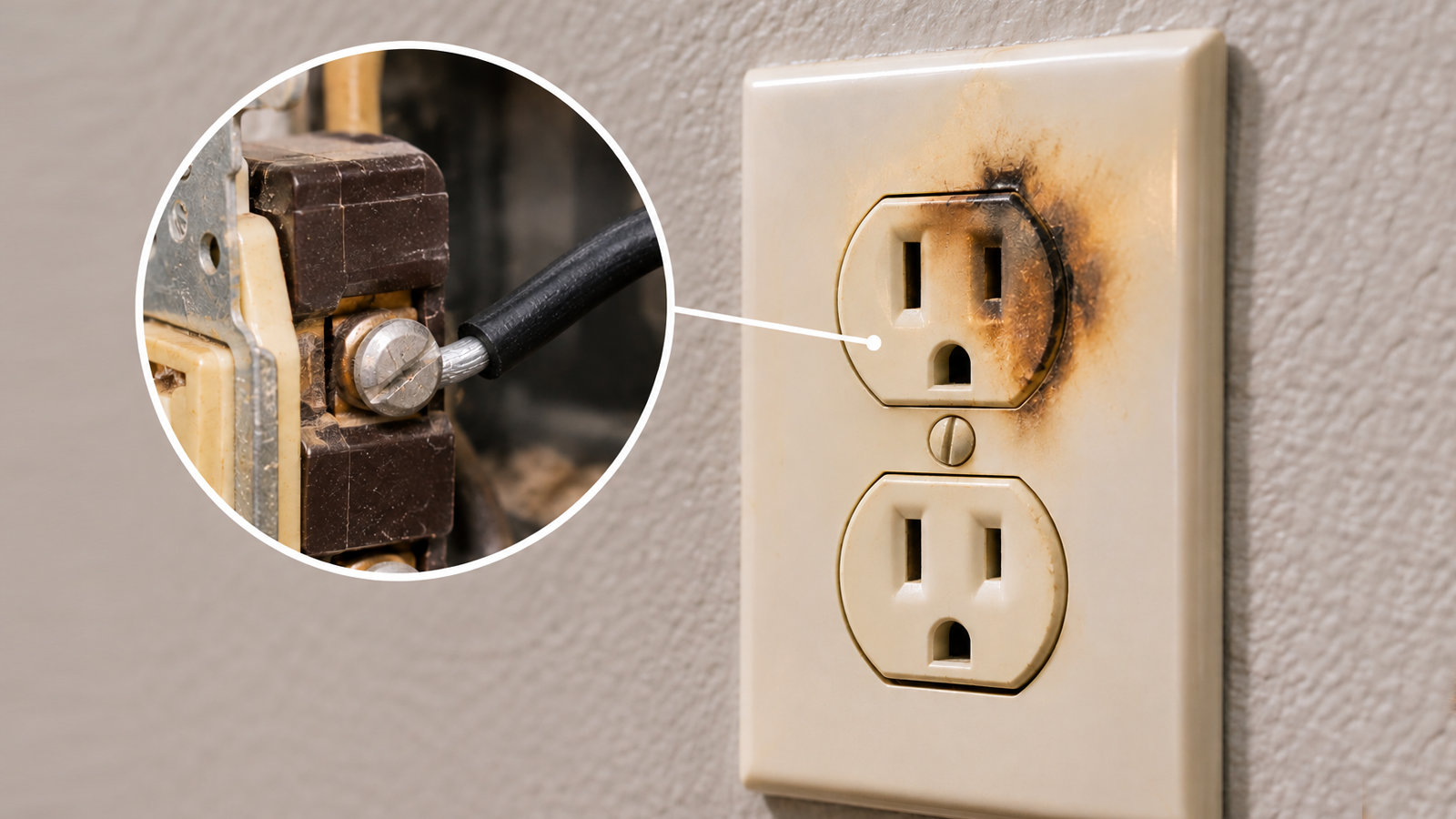
Some older installations have connections that can loosen or deteriorate over time. When electricity passes through a poor connection, it can generate excess heat.
That heat can damage the outlet, switch, or surrounding materials and increase the risk of an electrical fire.
But here’s something important to understand: Having aluminum wiring doesn’t automatically mean your home is unsafe.
What matters is the condition of the wiring, the types of connections used, and whether the system has been properly maintained or repaired.
That’s why a professional inspection is so valuable. Instead of guessing, you’ll know what you’re dealing with.
What Are the Warning Signs of Aluminum Wiring Problems?
One of the challenges with older electrical systems is that problems aren’t always obvious.
You might have a connection that’s slowly deteriorating without noticing anything unusual.
Other times, your home gives you a few hints.
Maybe a light flickers when you turn it on. Perhaps an outlet feels unusually warm, or a switch occasionally makes a crackling sound.
You might notice a faint burning smell near an outlet or see discolouration around a switch plate.
These symptoms don’t necessarily mean aluminum wiring is the cause. There are several electrical problems that can create similar warning signs.
But they do mean something needs attention.
If you notice burning smells, sparks, unusual heat, or buzzing from an electrical device, stop using the affected circuit and contact a licensed electrician promptly. If there are signs of an active fire, get everyone to safety and call emergency services.
And remember, some faulty connections don’t produce noticeable warning signs at all. That’s another reason an assessment is worthwhile, even when everything seems to be working normally.
Does Aluminum Wiring Need to Be Replaced?
Not always!
A lot depends on the age of the installation, the condition of the wiring, and the type of connections throughout your home.
Sometimes, aluminum wiring remediation is a practical option. This means addressing the problem connections rather than replacing every wire in the house.
An electrician may recommend approved connectors, compatible devices, or other repair methods appropriate for the existing installation.
The important part is that these repairs need to be done correctly. Simply swapping an old outlet for a new one doesn’t necessarily solve the problem, especially if the replacement device isn’t rated for aluminum conductors.
In other situations, aluminum wiring replacement may be the better long-term solution.
For example, if the wiring has extensive damage, there are repeated connection problems, or you’re already planning a major renovation, replacing some or all of the older circuits may make sense.
The right approach depends on what your electrician finds.
What Happens During an Aluminum Wiring Inspection?
If you’ve never had an electrical inspection before, it’s usually a pretty straightforward process.
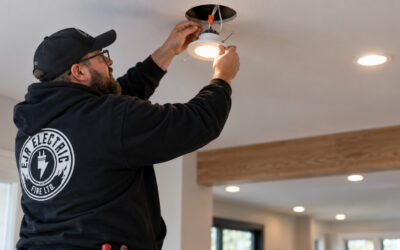
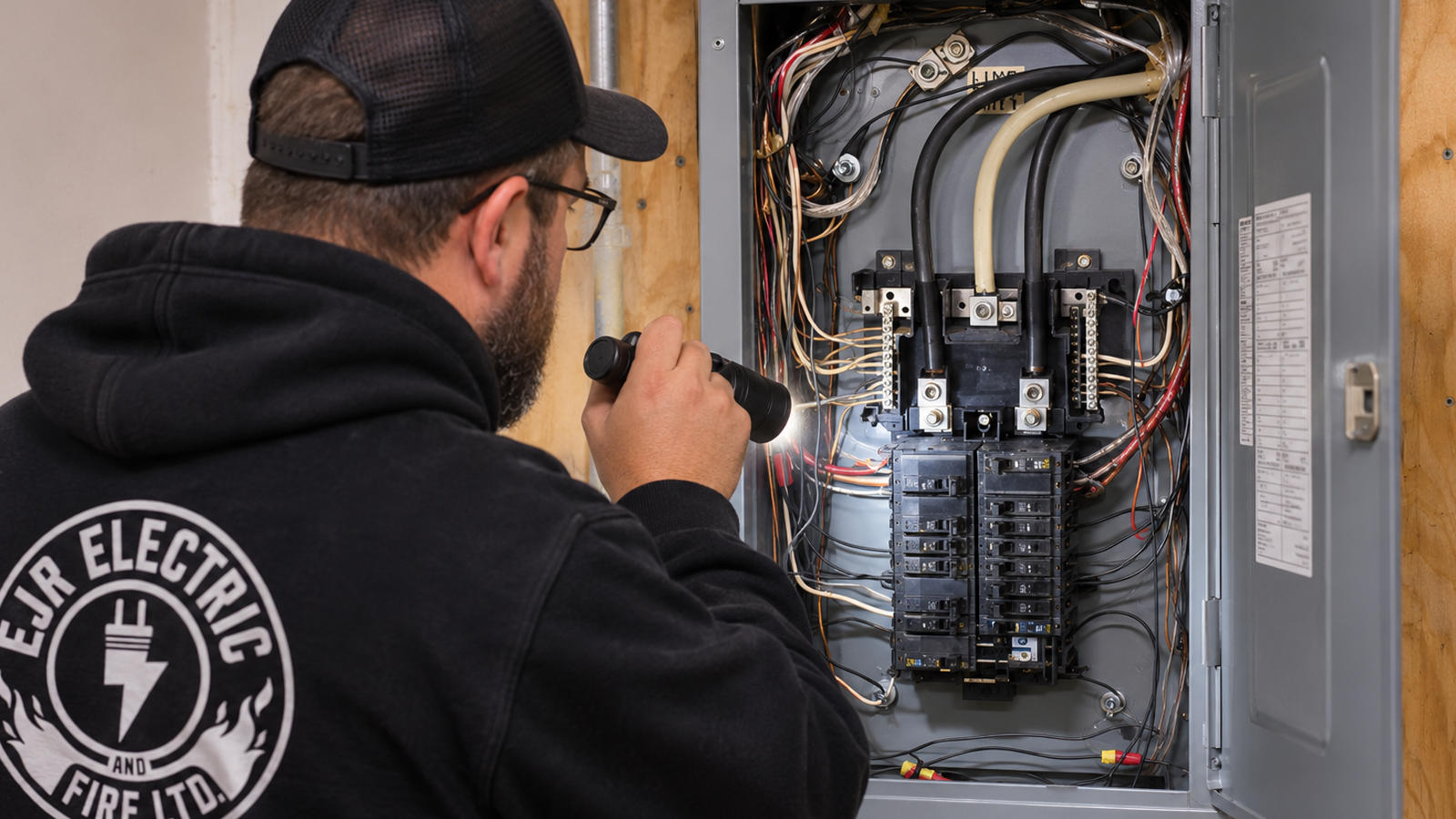
Your electrician will start by checking the type and condition of the wiring and looking at connections in your electrical panel, outlets, switches, and other accessible areas.
They’ll also look for signs of overheating, damaged insulation, loose connections, and devices that aren’t suitable for aluminum conductors.
Once they’ve had a good look, they can explain what they’ve found and recommend the next steps.
You might need a few repairs, more extensive aluminum wiring remediation, or possibly a larger rewiring project.
In Ontario, the Electrical Safety Authority’s aluminum wiring guidelines recommend having a Licensed Electrical Contractor assess the system, complete necessary repairs, and arrange the appropriate ESA inspection.
ESA+1
That way, you’re making decisions based on the actual condition of your electrical system rather than its age alone.
What About Home Insurance?
Here’s something that sometimes catches homeowners by surprise.
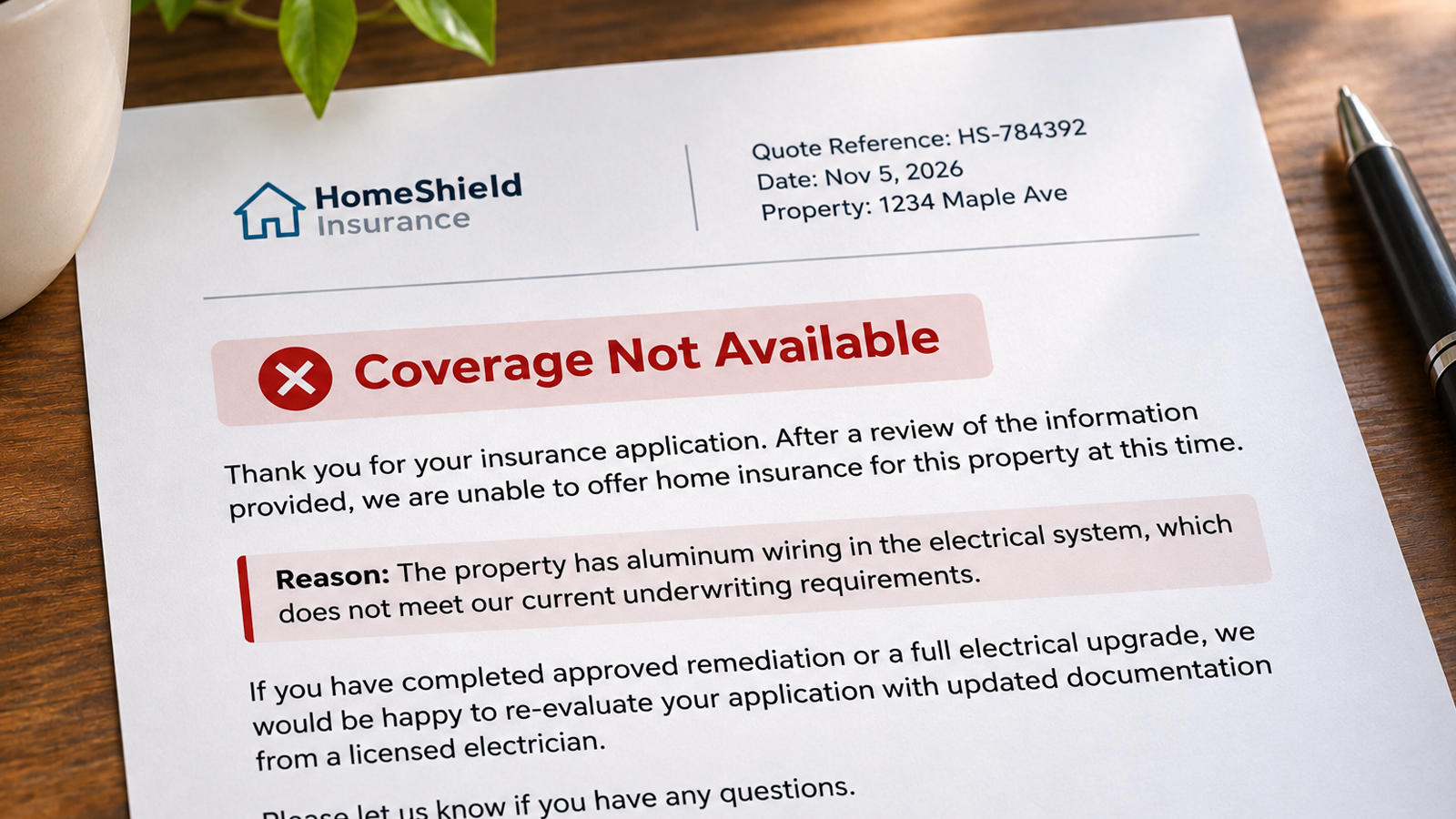
Some insurance companies have specific requirements for homes with older aluminum wiring. They may request an electrical inspection, proof of repairs, or documentation showing that the system meets applicable safety standards.
In some cases, an insurer may require aluminum wiring replacement before providing or renewing coverage.
If you’re buying an older home or reviewing your current insurance policy, it’s worth asking about these requirements ahead of time.
A licensed electrician can help you understand what work may be needed and arrange the appropriate electrical inspections.
Let’s Make Sure Your Home’s Wiring Is Safe
Older homes have a lot going for them, and having older wiring doesn’t mean you need to start planning a major renovation.
But knowing what’s behind your walls can make a big difference.
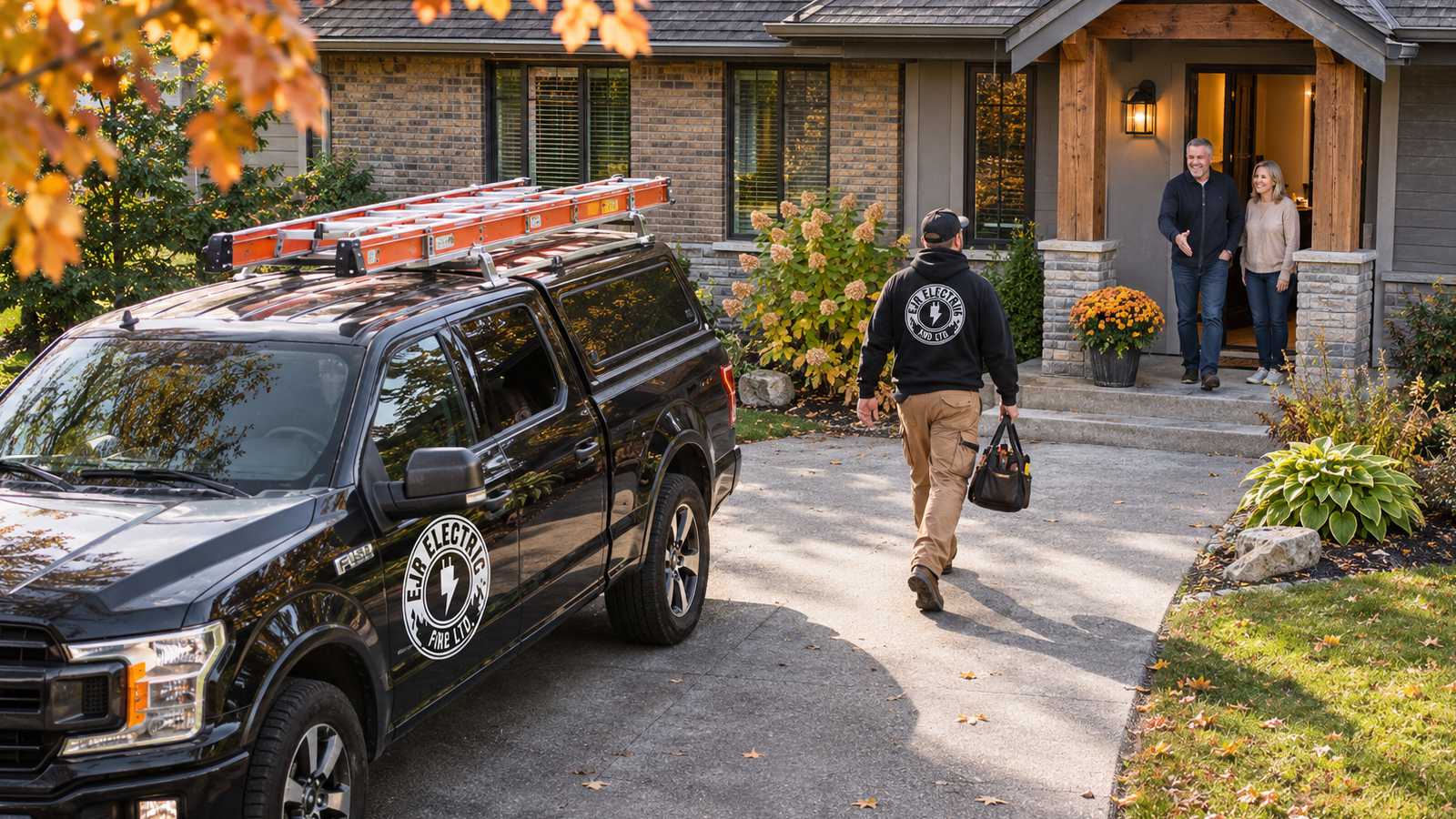
At EJR Electric & Fire, we help homeowners in Orangeville and surrounding communities understand their electrical systems and figure out what needs attention.
Whether you’re concerned about aluminum wiring, planning a renovation, or simply want to know if your home’s electrical system is in good shape, we’re happy to help.
You can learn more about our residential electrical services or contact EJR Electric & Fire to arrange an assessment.
We’ll take a look, explain what we find, and help you decide what makes sense for your home.