Power outages are more than a minor inconvenience. When the electricity goes out, you may lose your heat, sump pump, well pump, refrigerator, internet connection, and other systems you rely on every day. In the Orangeville area, where storms and unreliable service can leave homes without power, having a backup plan can make a difficult situation much easier to manage.
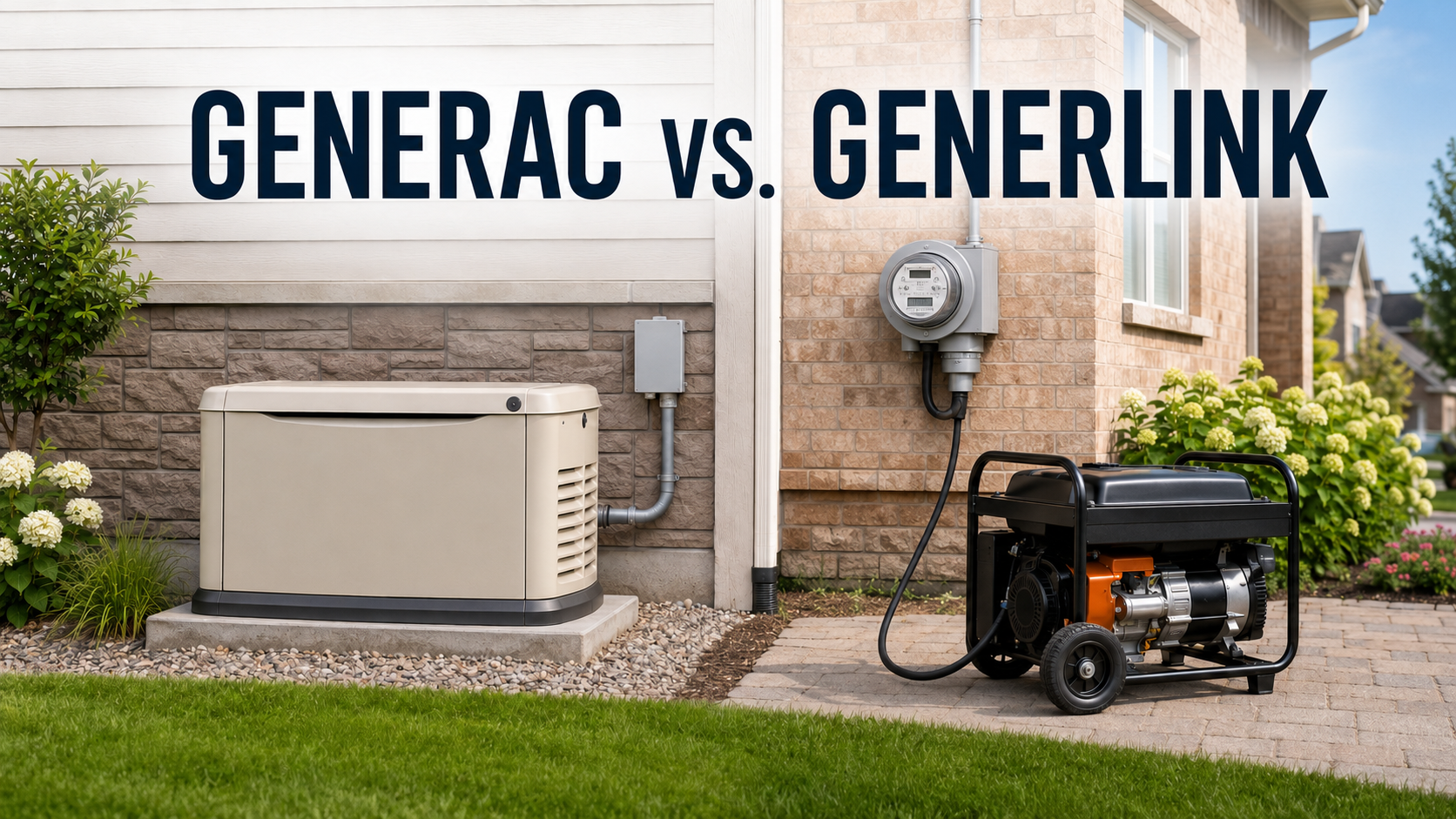
Two popular options are a Generac standby generator and a GenerLink system paired with a portable generator. Both can keep essential equipment running, but they work very differently. The Generac versus GenerLink decision usually depends on how much power you need, how automatic you want the system to be, and what you are comfortable investing upfront.
How Does a Generac Standby Generator Work?
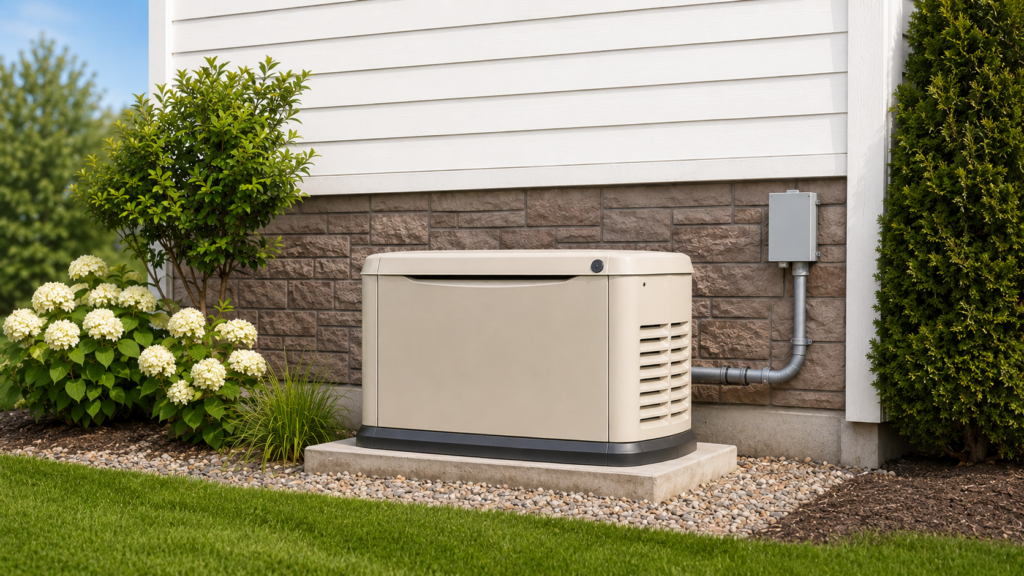
A Generac standby generator is permanently installed outside your home and connected to your electrical system. It is normally powered by natural gas or propane, so you do not have to refill a portable fuel tank during an outage.
When the power goes out, an automatic transfer switch disconnects your home from the utility and starts the generator. When utility power returns, the system transfers the home back to the grid and shuts down.
This automatic operation is one of the biggest reasons homeowners choose Generac. The system can begin working while you are sleeping, away from home, or dealing with everything else that comes with a major storm. You do not have to move equipment, connect cables, or start a generator outside in the rain or snow.
A Generac system can be sized to power selected essentials or most of the home. The right size depends on your electrical service, the equipment you want to operate, and how much power that equipment requires.
How Does a GenerLink System Work?
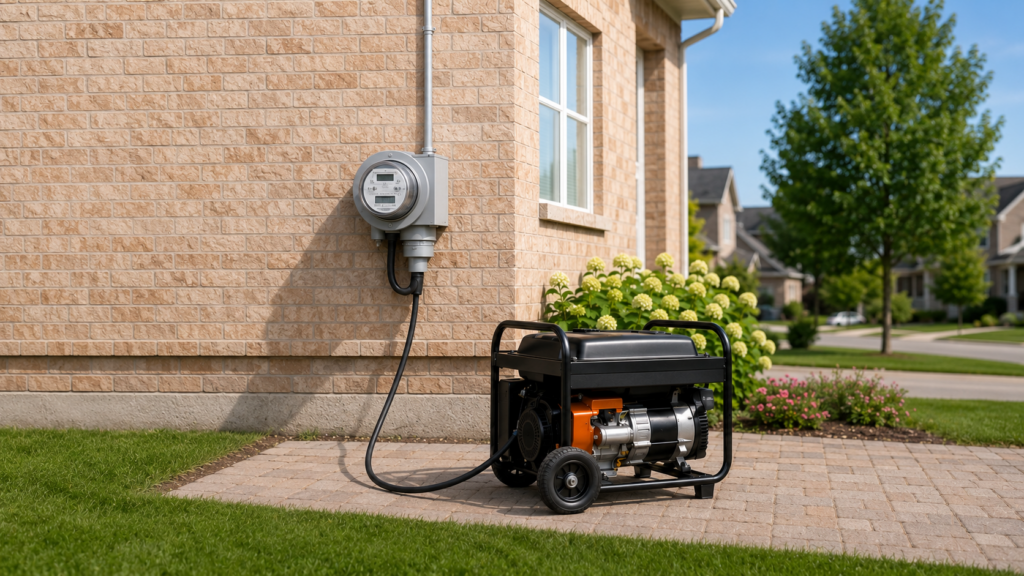
GenerLink is a transfer device installed behind your hydro meter. It allows a compatible portable generator to supply electricity through your home’s existing electrical panel.
When an outage occurs, you move the generator outside, connect it to the GenerLink device, and start it manually. You can then use your panel to control which circuits receive power.
This is safer and more convenient than running extension cords throughout the house. It also gives you flexibility because you can choose which circuits to operate. However, you must stay within the generator’s capacity. Running too many high-demand appliances at once can overload it.
In the Generac versus GenerLink comparison, GenerLink is the more hands-on option. Someone must be home and physically able to move, connect, and operate the generator safely.
Comparing the Cost
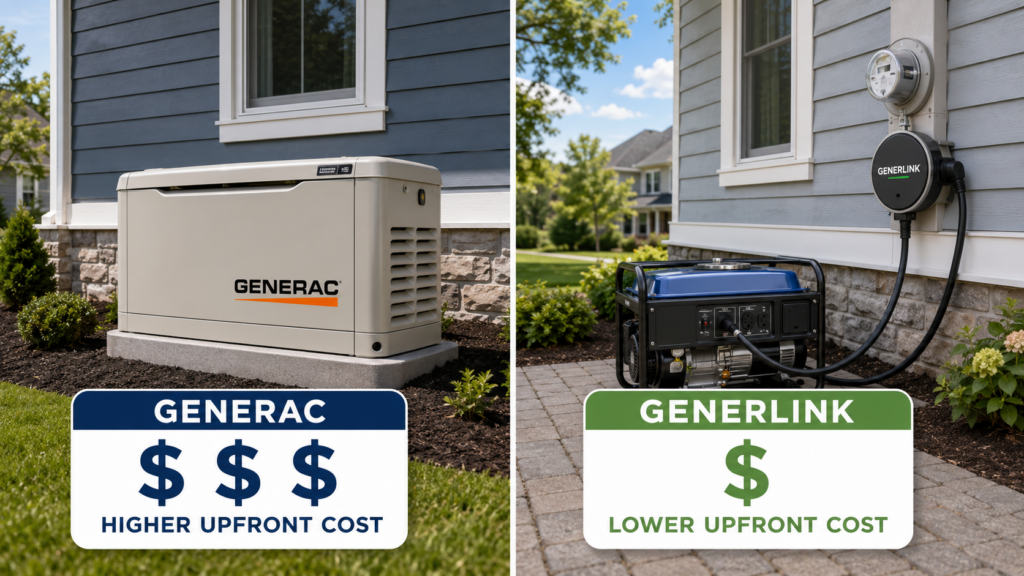
GenerLink is generally the more affordable option upfront. The complete cost may include the device, professional installation, a portable generator, the connecting cord, and any electrical work needed to make the system compatible with your home.
A Generac standby generator requires a larger investment because it is a complete, permanent system. Its cost may include the generator, transfer switch, fuel connection, permits, site preparation, and electrical installation.
When comparing Generac versus GenerLink, look at the total installed cost rather than the advertised price of one piece of equipment. The lowest equipment price may not include everything needed to create a safe and dependable backup-power system.

How Much of Your Home Can You Power?
With a GenerLink system, the portable generator determines how much power is available. A properly sized generator may support your furnace, sump pump, refrigerator, freezer, well pump, lights, internet equipment, and selected outlets. However, you may need to manage those circuits instead of operating everything at once.
High-demand equipment requires more planning. Central air conditioning, electric heating, hot tubs, electric water heaters, and some well pumps can quickly use a generator’s available capacity.
A Generac standby generator can often support more of the home, depending on its size. Some homeowners choose to power only essential circuits, while others want to maintain nearly normal household operation. An electrical load assessment helps determine what is realistic and prevents you from choosing a generator that cannot meet your needs.
Which System Is More Convenient?
Convenience is one of the clearest differences in the Generac versus GenerLink decision.
A Generac standby generator starts automatically. This can be especially helpful during overnight outages, winter storms, vacations, or situations where the homeowner cannot easily operate portable equipment. It also offers reassurance for homes that rely on sump pumps, wells, or other equipment that cannot wait for someone to start a generator.
GenerLink requires more involvement, but that may be perfectly reasonable for someone who experiences occasional outages and does not mind setting up a portable generator. If you are usually home and primarily want to protect a manageable group of essential systems, the manual approach may be enough.
Portable generators must always be operated outdoors and away from doors, windows, and vents. They produce carbon monoxide, which can enter the home if the generator is positioned incorrectly.
Installation and Maintenance
Both systems require professional planning and installation.
A Generac installation involves choosing a suitable outdoor location, arranging the electrical and fuel connections, installing transfer equipment, and confirming that the completed system meets current requirements. The generator also needs regular maintenance so it is ready when an outage occurs.
A GenerLink installation involves the electrical meter and requires coordination with the local utility. The device must be compatible with the electrical service, generator, and current utility requirements.
The portable generator also needs routine care. It should be stored correctly, tested periodically, and kept ready with appropriate fuel. Equipment that has been sitting untouched for years may not start when the lights go out.
Choosing the Right Backup Power System
GenerLink may be the better fit if you want a more affordable option, experience occasional outages, and are comfortable operating a portable generator. It provides flexible access to circuits throughout your home without relying on multiple extension cords.
Generac may be the better choice if you want automatic operation, greater capacity, and less disruption. It can be especially valuable for frequent outages, rural properties, homes with sump pumps or wells, and households where manually setting up a generator would be difficult.
Ultimately, the Generac versus GenerLink decision is about choosing the system that fits your home, priorities, and budget. EJR Electric installs both Generac standby generators and GenerLink systems in Orangeville and the surrounding area. We can assess your electrical service, discuss what you need to keep running, and help you understand the requirements for each option. Contact us to schedule a backup-power assessment before the next outage.